
Elevated ammonia and nitrite are the most common crisis situations in aquaponics — and having a clear action plan for both chemical and natural control methods can mean the difference between a quick recovery and losing your entire fish population. Here’s a practical guide to every effective method available to aquaponics growers in Australia.
Why Do Ammonia and Nitrite Need to Be Actively Managed?
Unlike nitrate, which builds up slowly and is consumed by plants, ammonia and nitrite are acutely toxic. Ammonia damages fish gills and suppresses immunity; nitrite causes “brown blood disease” by blocking oxygen transport in fish blood. Both compounds can reach dangerous levels within 24–48 hours under certain conditions, making fast, targeted responses essential.
What Natural Methods Control Ammonia and Nitrite in Aquaponics?
Beneficial Bacteria Establishment
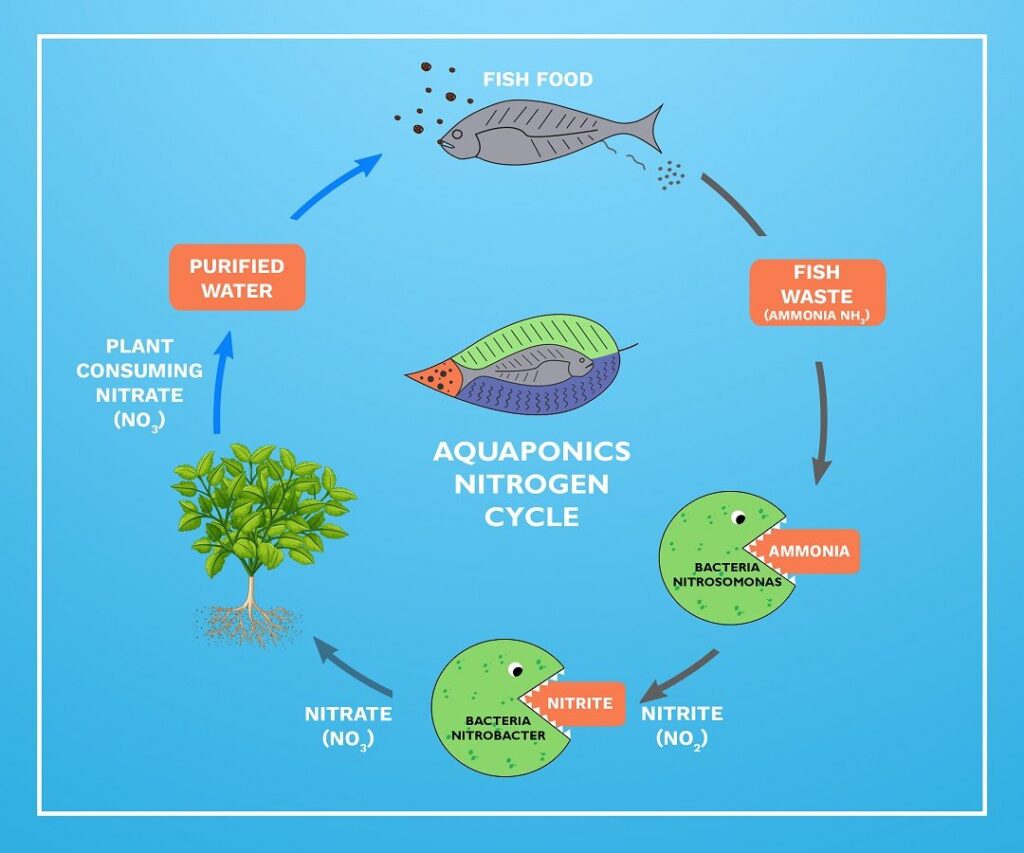
The most fundamental natural control is a fully established nitrogen cycle — sufficient populations of Nitrosomonas bacteria (which oxidise ammonia to nitrite) and Nitrospira or Nitrobacter bacteria (which oxidise nitrite to nitrate). In a well-cycled system, ammonia and nitrite rarely accumulate because bacterial activity stays ahead of fish waste production.
To accelerate bacterial establishment or recovery after a system crash, add commercial nitrifying bacteria products (available at aquarium stores), or seed your system with media from an established aquaponics system.
Reducing Fish Load and Feed
The most immediate natural control for rising ammonia is to stop feeding. Uneaten food and fish metabolism are the primary ammonia sources. Reducing or stopping feeding for 24–48 hours during a spike dramatically reduces ammonia input while bacteria process the backlog.
If your system is chronically struggling with ammonia, the root cause is often overstocking or overfeeding. Reduce fish biomass to a level your biofilter can handle.
Increasing Plant Coverage
Plants absorb ammonium directly from the water, providing a secondary ammonia sink alongside bacterial processing. Increasing plant density in your system — particularly fast-growing leafy greens with high nitrogen demand — can meaningfully improve ammonia management capacity over time.
Increasing Biofilter Surface Area
Nitrifying bacteria colonise surfaces throughout your system — media, pipes, tank walls, and dedicated biofilter media. Adding more colonisable surface area (additional media beds, biofilter chambers with high-surface-area plastic media) increases bacterial capacity and ammonia processing speed.
What Chemical Methods Are Available for Ammonia Control in Aquaponics?
Partial Water Changes
The most universally effective and immediate chemical intervention is a partial water change — replacing 20–30% of system volume with fresh, dechlorinated water. This dilutes both ammonia and nitrite concentrations rapidly. Always use aged or dechlorinated water (use sodium thiosulphate to neutralise chlorine, or let water sit 24 hours) to avoid killing beneficial bacteria.
Zeolite (Clinoptilolite)
Zeolite is a natural mineral with a strong affinity for ammonium ions. Placed in a mesh bag in a high-flow area of your system, zeolite absorbs ammonia from the water column. It has a limited capacity and must be recharged periodically by soaking in salt water. Zeolite is a useful emergency tool but not a long-term replacement for a healthy biofilter.
Salt for Nitrite Emergencies
Non-iodised aquarium or pool salt provides chloride ions that compete with nitrite for uptake through fish gills, significantly reducing nitrite toxicity. Add at 1–3 g/L during nitrite spikes. This doesn’t remove nitrite from the water — it reduces how much the fish absorb. Combine with a partial water change for a faster resolution.
pH Management
Ammonia toxicity increases sharply with rising pH. Keeping pH in the 6.8–7.2 range reduces the proportion of total ammonia present in the highly toxic free ammonia (NH₃) form. If ammonia is elevated, check pH first — if it’s above 7.5, bringing it down reduces acute toxicity while you address the root cause.
How Do You Prevent Ammonia and Nitrite Spikes in the First Place?
- Never overstock your fish tank — maintain an appropriate fish-to-biofilter ratio
- Feed only what fish consume in 5 minutes; remove uneaten feed promptly
- Remove dead fish immediately — a decomposing fish can crash a system overnight
- Avoid antibiotics and disinfectants that kill beneficial bacteria
- Test water weekly so you catch rising trends before they become emergencies
- Maintain stable water temperature — cold snaps slow bacterial activity and can cause temporary ammonia accumulation
Frequently Asked Questions
How quickly do partial water changes reduce ammonia in aquaponics?
A 25% water change reduces ammonia by approximately 25% immediately. Combined with stopping feeding and increased aeration, this typically stabilises the situation within a few hours.
Can I use ammonia-removing filter media in aquaponics?
Chemical ammonia-removing media (like zeolite or certain ion-exchange resins) can be used temporarily during cycling or emergencies. In an established system, relying on chemical media rather than biological filtration is not sustainable long-term.
How long does it take nitrite to drop after a water change?
A partial water change reduces nitrite proportionally to the volume changed. Bacterial processing then continues to remove remaining nitrite — in a well-established system, this typically takes 12–48 hours to return to safe levels.
Will increasing aeration help reduce ammonia in aquaponics?
Indirectly, yes. Nitrifying bacteria are aerobic — they require oxygen to function. Increasing dissolved oxygen (via more aeration) supports faster bacterial ammonia processing. High aeration also helps fish cope with elevated toxin levels.
Should I add bacteria supplements every time ammonia spikes?
Only if your biofilter has been damaged (by antibiotics, disinfectants, or extreme pH). For routine ammonia spikes caused by overfeeding or temporary overstocking, the existing bacterial population will recover once the cause is addressed.
Want to build an aquaponics system with reliable water chemistry management from the start? Get the complete setup guide here and learn how to keep your system in balance long-term.