
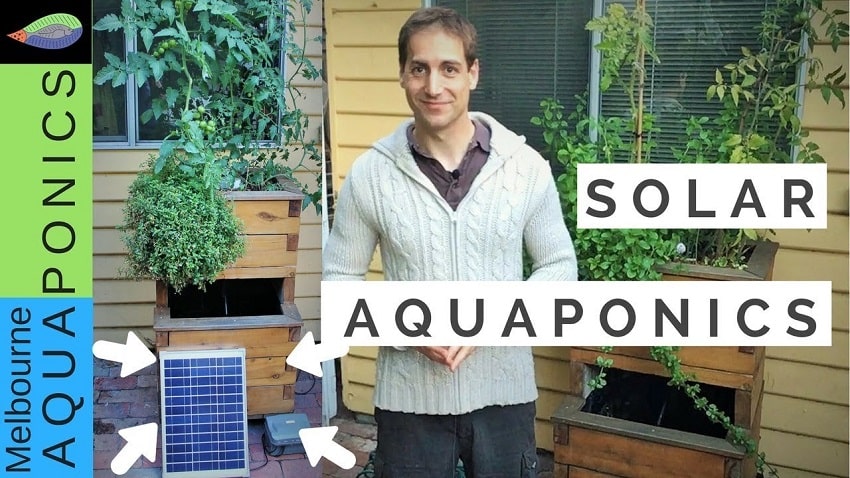
Running your aquaponics system on solar power is not only environmentally sound — it’s increasingly cost-effective, and in many parts of Australia, it’s the smartest way to manage your energy costs while future-proofing your food production system against rising electricity prices.
Why Solar Aquaponics Makes Sense in Australia
Australia is one of the sunniest continents on Earth, making it uniquely well-positioned for solar energy adoption. Aquaponics systems have relatively modest, predictable electricity requirements — primarily for water pumps and aeration — which are well-matched to solar power generation profiles. Running an aquaponics system on solar is practical, achievable, and delivers genuine long-term savings.
For remote properties, hobby farms, and off-grid setups, solar aquaponics eliminates the need for grid connection entirely. For suburban and urban growers, solar panels offset electricity costs and provide energy independence during grid outages.
What Electricity Does an Aquaponics System Need?
Understanding your system’s energy requirements is the starting point for solar sizing:
- Water pump — The primary energy consumer; typically 50–200 watts depending on system size and pump efficiency
- Air pump/compressor — Aeration for fish; typically 20–80 watts
- Grow lights — If used; 50–400+ watts depending on coverage area and light type; LED grow lights are the most energy-efficient option
- Water heater — If heating fish tank water; can be a significant load in winter; 200–2000 watts depending on tank size and temperature differential
- Monitoring equipment — Water quality sensors, controllers, and alerts; typically minimal energy draw (5–20 watts)
A typical backyard aquaponics system (without grow lights or heating) might require 100–300 watts continuously — very manageable for a modest solar setup.
Designing a Solar Aquaponics Power System
Direct Solar (No Battery)
The simplest approach is direct solar — solar panels connected directly to DC pumps and aerators. This works well for daytime-only operation, particularly in warm, sunny climates where nighttime water circulation is less critical. The limitation is that pumps stop when the sun goes down or behind clouds.
Solar With Battery Storage
Adding battery storage allows your system to run 24/7 regardless of sunlight availability. A battery bank sized for 1–2 days of autonomy provides strong protection against cloudy weather. LiFePO4 (lithium iron phosphate) batteries are the best choice for solar storage — long life, excellent depth of discharge, and good performance in variable temperatures.
Solar-Hybrid (Grid Backup)
For grid-connected growers, a solar-hybrid system uses solar power as the primary source and automatically switches to grid power when solar generation is insufficient. This provides the best of both worlds — maximum solar savings with grid reliability as a backup.
Practical Tips for Solar Aquaponics
- Use DC pumps where possible — DC water pumps run directly on solar power without inverter losses; significantly more efficient than AC pumps with an inverter
- Size your solar system generously — A 20–30% oversized system gives you headroom for cloudy days and future expansion
- Install a UPS or battery backup for critical components — A pump failure overnight can be fatal for fish; even a small battery backup for the pump provides insurance
- Combine with passive water heating — Solar thermal collectors or greenhouse passive heating reduce the electrical load from water heaters
- Monitor your energy use — A simple energy monitor shows real-time and cumulative consumption, helping you optimise and identify inefficiencies
Solar Aquaponics for Remote and Off-Grid Properties
For rural and remote growers without grid access, solar aquaponics is especially compelling. It enables food production in locations where reliable electricity supply would otherwise limit options. With sufficient solar capacity and battery storage, a fully off-grid aquaponics system can operate independently and reliably throughout the year.
Frequently Asked Questions
How many solar panels do I need to run a backyard aquaponics system?
A basic system with a 150W pump and 50W air pump running continuously needs approximately 200Wh per hour or 4.8kWh per day. With peak sun hours averaging 5–6 hours in most Australian locations, 2–3 x 200W solar panels (400–600W total) combined with a battery bank would provide reliable power year-round for a basic system without grow lights.
Can I use a solar panel directly to run an aquaponics pump without a battery?
Yes, if you choose a DC pump matched to your panel’s voltage output. Many growers run simple direct solar pump setups successfully, accepting that the pump slows or stops in low light. For fish-holding systems, a small battery backup provides critical insurance against overnight and cloudy-day pump failure.
Will solar aquaponics save me money?
Yes, over time. Solar panel costs have dropped dramatically and the long-term energy savings are real. The payback period depends on your system’s energy use, local electricity prices, and available solar incentives. Most Australian homeowners with solar installations achieve payback within 3–6 years.
What happens to my fish if the pump stops due to low solar?
Fish can survive short-term pump outages if dissolved oxygen doesn’t drop to critical levels. Larger, well-aerated systems have more buffer time. A battery backup for the air pump alone — the most critical component for fish survival — can be an affordable safety net for solar-powered systems.
Are there government incentives for solar in Australia?
Yes. The Small-scale Renewable Energy Scheme (SRES) provides STCs (Small-scale Technology Certificates) that reduce the upfront cost of solar installations. State-based rebates and incentives also exist in some jurisdictions. Check with a local solar installer or Energy.gov.au for current incentives available in your state.
Ready to build an efficient, sustainable aquaponics system that works with Australian conditions? Get the complete build guide here and start growing food in just 2 hours of setup time.