
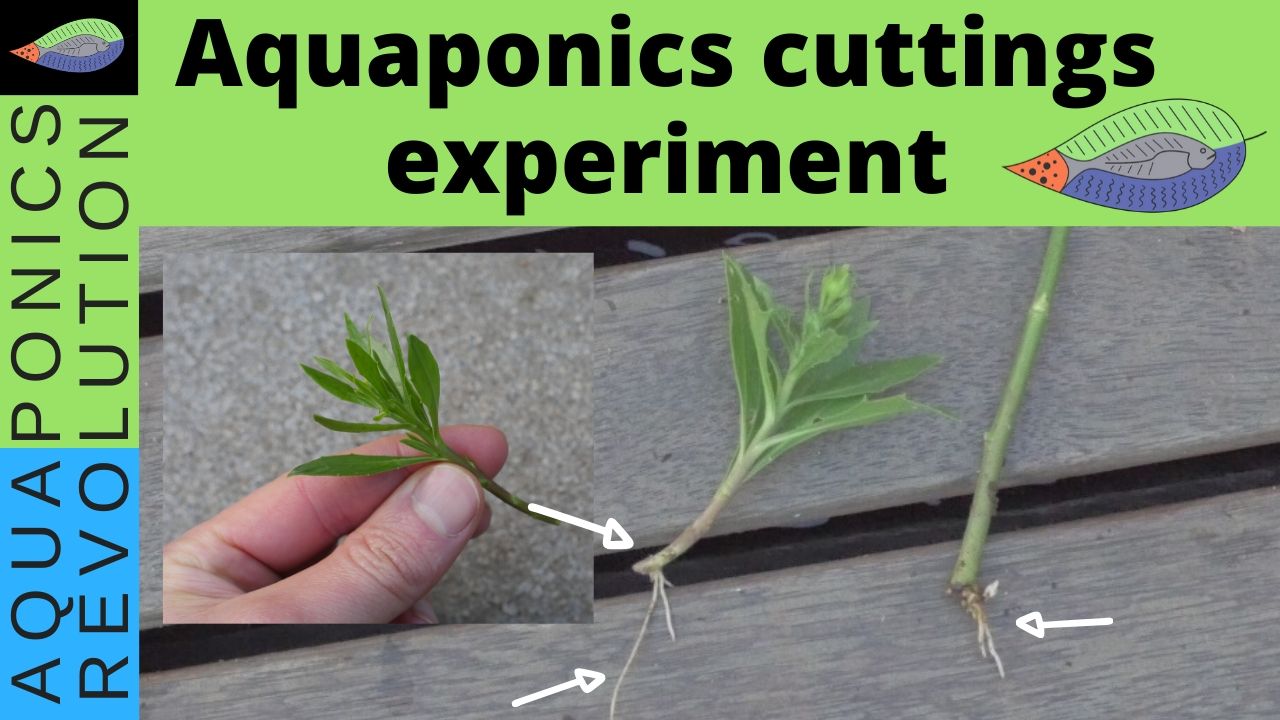
Aquaponics grow beds are one of the best propagation environments you’ll ever find — constant moisture, steady warmth, and nutrient-rich conditions that give cuttings exactly what they need to develop strong roots fast.
Propagating plants and trees from cuttings in aquaponics is free, effective, and remarkably simple. Instead of buying seedlings or seeds, you multiply your existing plants indefinitely — expanding your system, sharing with friends, or establishing a small propagation nursery alongside your main production beds. Here’s a complete guide to cutting propagation in aquaponics.
Why Are Aquaponics Systems Ideal for Propagating Cuttings?
Successful cutting propagation requires three things: consistent moisture, good aeration, and moderate temperatures. Aquaponics delivers all three without any extra effort:
- Moisture: Media beds stay consistently damp between flood cycles — perfect for cutting root development.
- Aeration: Clay pebble and gravel media provide excellent air pockets around cut stem bases, preventing rot while allowing root growth.
- Nutrients: Once roots form, aquaponics water delivers immediate nutrition — cuttings establish faster than in potting mix or water alone.
- Temperature: Most aquaponics systems run at 18–26°C — ideal for most cutting types.
What Types of Plants Can You Propagate from Cuttings in Aquaponics?
Herbs and Leafy Greens
These are the easiest and most rewarding cuttings to propagate in aquaponics:
- Basil — root in water first, transplant when 2–3 cm roots appear
- Mint and peppermint — extremely vigorous, roots in 5–7 days
- Rosemary — semi-hardwood cutting, takes 3–4 weeks to root
- Thyme and oregano — softwood cuttings, roots in 2–3 weeks
- Watercress — roots within days in water, highly productive in DWC
- Lemon balm — prolific and fast-rooting, excellent for aquaponics
Fruiting and Climbing Vegetables
- Tomatoes — side shoots (suckers) root readily and produce fruit slightly later than seed-grown plants
- Capsicum and chilli — stem cuttings work well, particularly useful for extending productive plants season to season
- Passionfruit — semi-hardwood cuttings, can be rooted in aquaponics before transplanting to garden
Fruit Trees and Ornamentals
Aquaponics media beds can be used as a propagation nursery for more valuable woody cuttings:
- Fig trees — hardwood cuttings in winter, high success rate in moist media
- Mulberry — softwood and hardwood cuttings both work well
- Lemon, lime, and citrus — semi-hardwood tip cuttings with rooting hormone
- Olive — semi-hardwood cuttings, notoriously difficult but aquaponics conditions improve success
- Elderberry — hardwood cuttings, roots readily in moist media
How to Propagate Cuttings in Aquaponics: Step by Step
1. Take the Right Cutting
Cutting type and timing are critical to success:
- Softwood cuttings (spring/summer): tip growth, 8–12 cm, flexible and green — herbs, leafy greens, tomato suckers
- Semi-hardwood cuttings (late summer/autumn): slightly firmer, beginning to lignify — rosemary, citrus, passionfruit
- Hardwood cuttings (winter): fully dormant, woody stems — fig, mulberry, elderberry, willow
Always cut below a node (leaf joint) with a clean, sharp blade. Stems cut above a node tend to die back and rot rather than root.
2. Prepare the Cutting
- Remove all leaves from the lower half of the cutting, leaving 2–4 leaves at the tip.
- For woody cuttings, lightly wound the base (scrape 1–2 cm of bark from one side) to expose cambium tissue — this stimulates root initiation.
- Dip the cut end in rooting hormone powder or gel (optional but significantly improves success rate for woody species).
3. Place in Your Aquaponics System
Two approaches work well:
- Direct insertion into media bed: Push the cutting 5–8 cm into the clay pebble media between flood cycles, in a lightly shaded area. The media holds the cutting firm while the flood/drain cycle maintains moisture.
- Dedicated propagation zone: Designate a small section of a media bed exclusively for cuttings. Use finer media (coarse sand or perlite mixed with clay pebbles) for better contact with small cutting stems.
4. Maintain Conditions During Rooting
- Shade: Shade cuttings from direct midday sun until rooted — wilting leaves indicate excessive transpiration stress.
- Humidity: For difficult cuttings, tent with a clear plastic bag or use a humidity dome for the first 1–2 weeks.
- Patience: Don’t pull on cuttings to test for roots. Check at 2–3 weeks by gently lifting — new white roots are clearly visible.
5. Transplant Once Rooted
Once cuttings have a visible root system (2–5 cm roots), they can be left in place to grow on in the aquaponics system or transplanted to a dedicated grow bed, container, or garden position.
Tips for Higher Propagation Success
- Take 3–5 cuttings for every 1 plant you need — some failures are normal, especially with difficult species.
- Take cuttings in the morning when stems are most turgid.
- Use rooting hormone for all woody species — it dramatically improves success rates.
- Avoid propagating during heatwaves — cuttings are vulnerable to heat stress before they can draw water through roots.
- Label your cuttings with variety and date — easy to forget when managing a large system.
Frequently Asked Questions
Can I propagate cuttings in a raft (DWC) system?
Yes, with some modifications. Place cuttings in 50–75 mm net pots with a small amount of clay pebbles supporting the stem, and float them in the raft system. Ensure the cut end is submerged 1–2 cm in the water. This works extremely well for herbs and leafy greens but less reliably for woody cuttings.
What is the best time of year to take cuttings for aquaponics propagation?
Spring and early summer are ideal for most softwood and semi-hardwood cuttings. Hardwood cuttings of deciduous trees (fig, mulberry) are best taken in winter while plants are dormant. Herbs can be propagated year-round in a temperature-managed system.
Do I need rooting hormone for aquaponics cuttings?
For herbs and soft leafy plants — no. Mint, basil, and watercress root without any assistance. For semi-hardwood and hardwood cuttings (rosemary, citrus, fig) — yes, rooting hormone significantly improves success rates and speed.
How do cuttings affect water quality in aquaponics?
Before rooting, cuttings release small amounts of plant compounds into the water. This is generally harmless at small scale. Avoid propagating large numbers of eucalyptus, bay laurel, or other allelopathic plants in your main system, as these species release compounds that can inhibit other plant growth.
Can I sell propagated plants from my aquaponics system?
Yes — propagating and selling aquaponics-rooted herbs, edible plants, and fruiting trees is an excellent supplementary income stream. Aquaponics-grown cuttings establish faster than nursery plants and can be marketed as chemical-free, organically grown material.
Want to learn exactly how to set up and run a productive aquaponics system — from propagation through to harvest? Our complete aquaponics training gives you the full blueprint — start building yours today.
Thanks
So my sistem chop and flip design
Now after 5 month Idont now my fish dont Growth
Idont no waht hapen
In my sistem but the plant
Very good
Hello Atheer, what species of fish are you growing? where are you living? Have you tried the aquaponics cuttings technique before?