
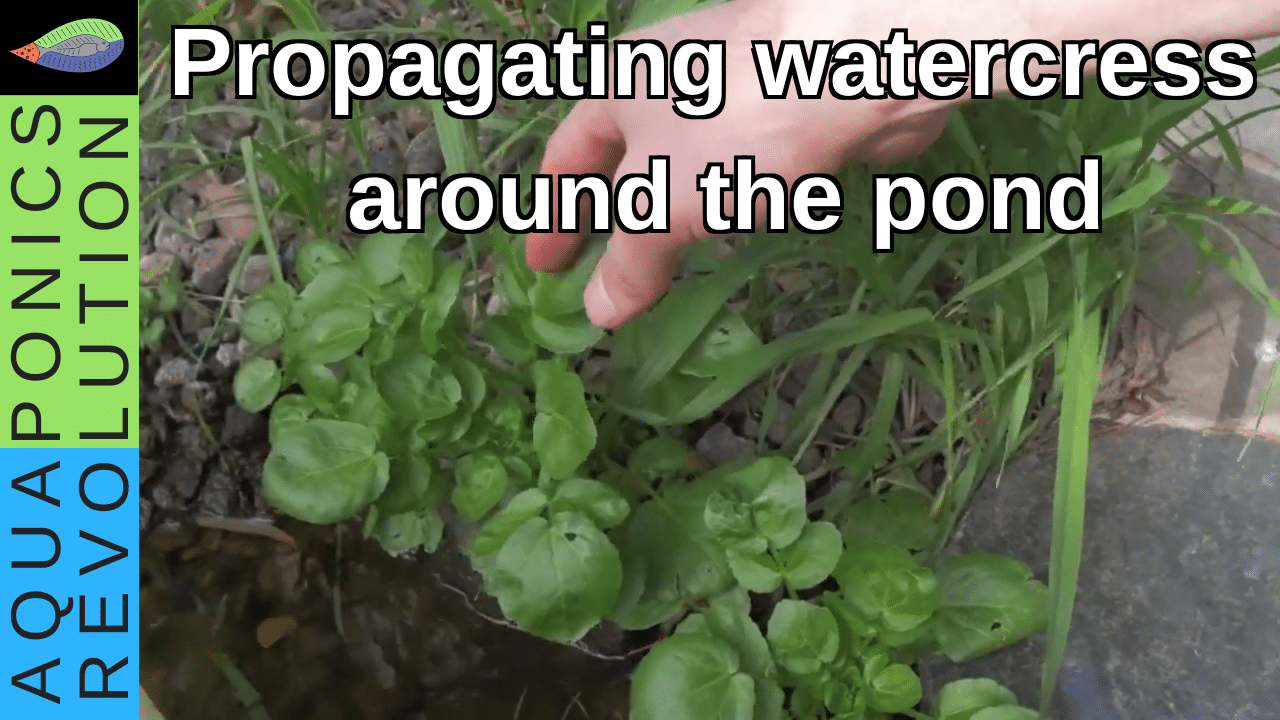
Watercress is one of the fastest-growing, most nutritious plants you can put in an aquaponics system — and once established, it practically takes care of itself.
This semi-aquatic superfood thrives in the constant moisture and nutrient-rich water of aquaponics. It grows in both media beds and raft (DWC) systems, tolerates a wide temperature range, and can be harvested continuously for months. Here’s everything you need to grow watercress successfully in aquaponics — from propagation through to year-round harvests.
Why Is Watercress Ideal for Aquaponics?
Watercress (Nasturtium officinale) is naturally a water plant. In the wild, it colonises shallow streams and riverbanks. In aquaponics, it finds a near-perfect environment: continuous water flow, high moisture at the root zone, and a steady supply of dissolved nutrients.
- Fast growth: Ready to harvest in 4–6 weeks from transplant.
- High nutritional value: Rich in vitamins A, C, K, and iron — one of the most nutrient-dense leafy greens you can grow.
- Low maintenance: Watercress is vigorous and weed-competitive once established.
- Year-round production: With minimal temperature management, you can harvest across all four seasons.
- Continuous harvest: Cut-and-come-again growth means one planting keeps producing for months.
What Are the Best Growing Conditions for Watercress in Aquaponics?
Water Temperature
Watercress grows best in water temperatures of 10–18°C. It tolerates slightly warmer conditions (up to 22°C) but may bolt (go to seed) in sustained heat. This makes it a superb cool-season crop in temperate climates, and an excellent winter producer in subtropical regions.
pH Range
Watercress prefers a pH of 6.5–7.5 — comfortably within the standard aquaponics range of 6.8–7.2. No pH adjustment is typically needed for watercress specifically.
Light Requirements
Watercress grows well in partial shade to full sun. In hot climates, afternoon shade significantly extends its productive life before it bolts. In cooler climates or indoors, full sun maximises growth rate. Minimum 4–6 hours of direct sunlight or 10–12 hours of fluorescent or LED grow lighting.
Nutrient Requirements
Watercress is a moderate feeder. Standard aquaponics nitrate levels of 20–80 ppm are ideal. It is not a heavy nutrient consumer compared to fruiting crops, so it performs well even in lightly stocked systems.
How Do You Propagate Watercress for Aquaponics?
Option 1: Grow from Cuttings (Fastest Method)
Watercress propagates incredibly easily from cuttings — this is the fastest and most reliable method:
- Take 10–15 cm stem cuttings from a healthy watercress plant (from your garden, a friend’s system, or even a bunch from the supermarket or greengrocer).
- Remove leaves from the lower half of each cutting.
- Place cuttings in a glass of water on a sunny windowsill.
- Roots appear within 3–7 days.
- Transplant into your aquaponics system once roots reach 2–3 cm.
Using supermarket watercress is a surprisingly effective shortcut — simply leave a bunch in water for a week and you’ll have rooted cuttings ready to plant.
Option 2: Grow from Seed
Watercress seeds are tiny but germinate quickly (3–5 days) in warm conditions:
- Sow seeds in a tray of moistened seed-raising mix or damp paper towel.
- Keep at 15–20°C — do not let seedling medium dry out.
- Thin seedlings to 5 cm spacing once they reach 3 cm tall.
- Transplant to aquaponics system once they have a healthy root system (2–3 weeks).
Which Aquaponics System Works Best for Watercress?
Raft (DWC) Systems
Raft systems are the optimal environment for watercress. Roots submerged in aerated, nutrient-rich water produce rapid, lush growth. Plant cuttings or seedlings in 50 mm net pots with a small amount of clay pebbles for support and let roots grow freely into the water. Spacing: 150–200 mm between plants.
Media Bed Systems
Watercress also thrives in flood-and-drain media beds. It tolerates the wet-dry cycles well and produces slightly shorter, more compact growth compared to DWC. Use a flood cycle of 30 minutes on, 30 minutes off during the day; reduce to 2 floods overnight. Plant directly into clay pebbles at 150 mm spacing.
NFT (Nutrient Film Technique)
Watercress grows in NFT channels but benefits from a higher-than-usual flow rate to keep roots consistently wet. It can block channels if allowed to grow densely — harvest regularly and keep plants trimmed back.
How Do You Harvest Watercress for Maximum Yield?
Watercress is a cut-and-come-again crop. Follow these harvesting practices for continuous production:
- First harvest: 4–6 weeks after transplanting, when plants are 15–20 cm tall.
- Cutting technique: Use clean scissors or snips to cut stems 5–8 cm above the water level, leaving several leaves and nodes intact for regrowth.
- Harvest frequency: Every 2–3 weeks once established — more frequently in warm conditions when growth accelerates.
- Remove flowers immediately: If watercress begins flowering (bolting), harvest aggressively or the plant becomes bitter and growth slows. In warm weather, pinch flower heads as soon as they appear.
Common Problems with Watercress in Aquaponics
Bolting (Going to Flower)
Triggered by warm temperatures (above 20°C sustained) or long day length. Solutions: provide afternoon shade, harvest more frequently, or use watercress as a cool-season crop only.
Yellowing Leaves
Usually indicates iron deficiency (common in higher-pH systems) or low nitrates. Check pH — if above 7.4, iron becomes less bioavailable. Add chelated iron supplement and ensure pH is 6.8–7.2.
Root Rot
Rare in DWC systems with good aeration, but can occur in stagnant media beds. Ensure adequate flood frequency, check air pump function, and confirm dissolved oxygen is above 5 mg/L.
Frequently Asked Questions
Can watercress grow in aquaponics year-round?
Yes, in most temperate and cool climates. In hotter climates, watercress is best grown as a cool-season crop (autumn through spring). With shade and water cooling strategies, summer production is possible but requires more management.
How long does a watercress plant last in aquaponics?
With regular harvesting and good water quality, a single watercress plant can produce for 3–6 months before quality declines and replacement is worthwhile. Stagger your plantings every 6–8 weeks to maintain continuous production.
Is watercress easy to grow for beginners?
Yes — watercress is one of the most forgiving plants for aquaponics beginners. It tolerates a range of conditions, propagates effortlessly from cuttings, and gives rapid, visible results that build confidence quickly.
Can I use store-bought watercress to start plants?
Absolutely. Fresh supermarket or greengrocer watercress placed in water will develop roots within 5–10 days and can then be transplanted directly into your aquaponics system. It’s a free and foolproof way to start.
Does watercress need fertiliser in aquaponics?
No additional fertiliser is needed in a well-stocked aquaponics system. Fish waste provides all the nitrogen and phosphorus watercress requires. The only exception is iron — add chelated iron if plants show yellowing at normal pH levels.
Want to know which plants to grow and how to design the perfect aquaponics system for your space? Our complete aquaponics training gives you a proven plant-to-fish blueprint — start growing today.