
Cycling your aquaponics system is the most important step you’ll take — it establishes the beneficial bacteria that convert toxic fish waste into the plant nutrients that make everything work.
Without a properly cycled system, fish will die within days from ammonia poisoning. With it, your system runs cleanly and productively for years. The good news: cycling is straightforward when you understand the biology. This complete guide walks you through every method, every stage, and every test you need to cycle successfully.
What Is Aquaponics Cycling?
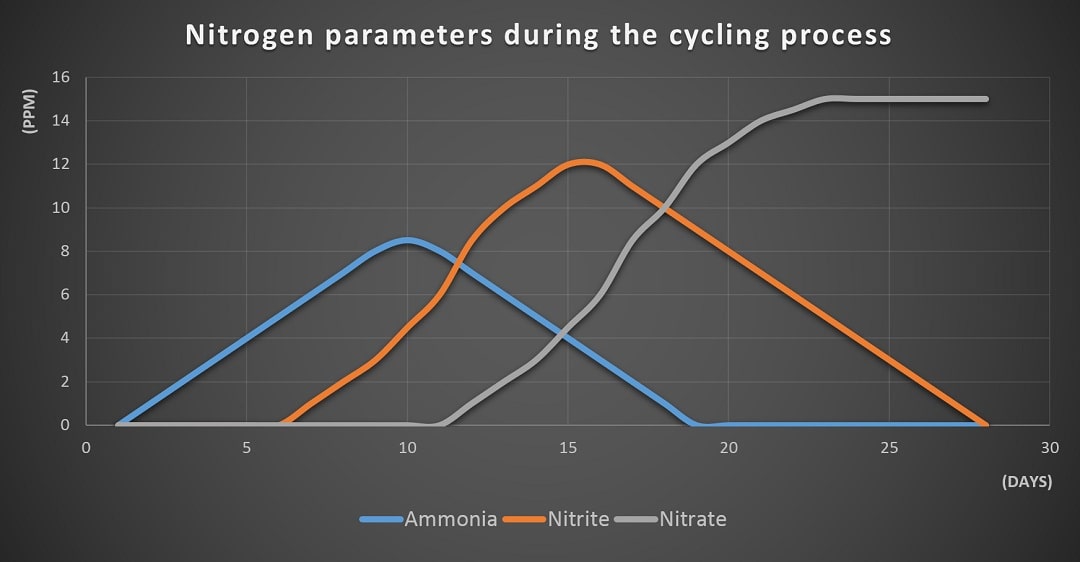
Cycling refers to establishing a thriving colony of nitrifying bacteria in your system — specifically in your grow media, biofilter, and any surface area the water contacts. These bacteria perform a two-step conversion that makes aquaponics possible:
- Nitrosomonas bacteria convert ammonia (NH₃, produced by fish waste and uneaten feed) into nitrite (NO₂⁻).
- Nitrobacter bacteria convert nitrite (toxic) into nitrate (NO₃⁻) — the plant fertiliser that drives your grow beds.
This sequence is called the nitrogen cycle. A cycled system processes fish waste continuously, keeping ammonia and nitrite levels safe for fish (<0.5 ppm each) while producing the nitrates your plants consume.
How Long Does Aquaponics Cycling Take?
The standard cycling period is 30–45 days without shortcuts. Using bacterial supplements or media from an established system can reduce this to 10–20 days. You’ll know your system is cycled when:
- Ammonia drops to <0.5 ppm within 24 hours of a dose
- Nitrite drops to <0.5 ppm within 24 hours
- Nitrate is measurably present (10–50+ ppm)
What Do You Need Before You Start Cycling?
Before adding any water, check that your system is ready:
- System leak-tested: Run the pump and check all connections for 24 hours with plain water.
- Media rinsed: Clay pebbles and gravel must be thoroughly rinsed to remove dust and fine particles that cloud water.
- Water dechlorinated: Chlorine and chloramine in tap water kill the bacteria you’re trying to establish. Let tap water sit for 24 hours (chlorine only) or use a dechlorinator product (essential for chloramine).
- pH in range: Bacteria need pH 6.8–8.0 to establish. Test before adding ammonia source.
- Test kit ready: You need an aquarium test kit measuring ammonia, nitrite, nitrate, and pH. API Freshwater Master Test Kit is the most reliable option.
What Are the Main Cycling Methods?
Method 1: Fishless Cycling (Recommended for Beginners)
Fishless cycling establishes bacteria before adding fish, avoiding fish stress and death during the process.
- Add ammonia source: Use pure ammonia (5–10% concentration, no surfactants — must not produce bubbles when shaken) dosed to 2–4 ppm. Alternatively use ammonium chloride, urea, or decaying plant matter (a handful of aquatic plant clippings works well).
- Maintain ammonia at 2–4 ppm: Test daily. Re-dose when ammonia drops below 1 ppm to maintain a continuous food supply for bacteria.
- Watch for nitrite: Around days 7–14, nitrite begins rising — bacteria are working. Continue maintaining ammonia.
- Watch for nitrate: Around days 20–35, nitrate begins rising and nitrite starts falling — the full cycle is underway.
- Add fish when parameters stabilise: When ammonia and nitrite both fall to <0.5 ppm within 24 hours of a dose, your system is cycled and ready for fish.
Method 2: Fish-In Cycling
Starting with fish is riskier but allows you to begin growing plants immediately. Use only hardy species (silver perch, goldfish, tilapia) and keep stocking levels very low — 20–30% of eventual capacity.
- Test every day — ammonia and nitrite above 1 ppm require a 20–30% water change immediately.
- Feed fish minimally during cycling (once daily, only what’s eaten in 2 minutes) to limit ammonia load.
- Add aquatic plants to the grow beds immediately — even unrooted cuttings help absorb ammonia directly.
Method 3: Seeded Cycling (Fastest)
Add beneficial bacteria from an established source to dramatically accelerate cycling:
- Established media: A bucket of used clay pebbles or gravel from a cycled system contains billions of bacteria. Adding even 5–10 L to your media bed can halve cycling time.
- Bottled bacteria: Products like Nitrify (Australia), API Quick Start, or Dr Tim’s One and Only add live bacterial cultures. Follow manufacturer dosing instructions and maintain an ammonia source.
- Pond water: Adding 20–30 L of water from an established pond or aquarium introduces bacteria and can kick-start cycling within days.
Cycling Troubleshooting: What If Nothing Seems to Be Happening?
Ammonia Not Rising After Fish Addition
Fish load is too low, or pH is too high (above 8.5) causing ammonia to convert to less toxic ammonium form. Check pH and add a few more fish or a small additional ammonia dose.
Nitrite Stays High for Weeks
Nitrobacter bacteria establish more slowly than Nitrosomonas. Be patient — continue maintaining the ammonia dose, ensure good aeration, and avoid water changes during this phase. Adding more media surface area (additional clay pebbles) can help.
Ammonia and Nitrite Both Drop to Zero Without Nitrate Rising
Possibly anaerobic (oxygen-depleted) conditions, or your test kit is expired. Check dissolved oxygen (should be above 5 mg/L), ensure the pump is running 24/7, and use a fresh test kit.
Testing Schedule During Cycling
- Days 1–14: Test every 2 days — ammonia, nitrite, pH
- Days 14–30: Test every day — ammonia, nitrite, nitrate, pH
- Days 30+: Test daily until both ammonia and nitrite hold below 0.5 ppm for 3 consecutive days
Cycling is the step where many beginners feel unsure â and it’s exactly where good training makes the biggest difference. Easy Aquaponics includes daily monitoring templates and a clear cycling protocol so you know exactly what to expect at each stage.
Frequently Asked Questions
Can I add plants during cycling?
Yes — and you should. Plants help absorb ammonia directly, reducing peak levels. Start with fast-growing leafy greens: lettuce, silverbeet, or watercress transplanted from cuttings establish quickly and help stabilise the system during cycling.
What happens if I skip cycling?
Without an established bacterial colony, ammonia will spike rapidly after adding fish. Even hardy fish will show stress signs (gasping, lethargy) within days, and sensitive species can die within a week. Never stock a full fish load into an uncycled system.
Can I cycle my aquaponics system in winter?
Yes, but more slowly. Nitrifying bacteria are most active at 25–30°C. Below 15°C, activity slows significantly. Winter cycling may take 60–90 days. Heating the system water to 20–25°C during cycling dramatically speeds the process.
Do I need to cycle my system again after a long shutdown?
If your system has been dry for more than 2–4 weeks, the bacterial colony will have died. Re-cycle as if new. If it was shut down but kept wet, bacteria may survive in a dormant state — re-introduce an ammonia source and test to confirm the cycle is still active before adding fish.
How do I know when cycling is complete?
Your system is fully cycled when it processes 2–4 ppm ammonia to <0.5 ppm ammonia AND <0.5 ppm nitrite within 24 hours, consistently over 3 consecutive days. Nitrate should be measurably present (10 ppm+).
Related aquaponics guides
- Beginner’s guide to aquaponics â the foundations every new grower should know.
- Best plants for aquaponics â what to grow once your system is cycled and ready.
- Holistic aquaponics â build a system that’s beautiful as well as productive.
Ready to build and cycle your own system the right way? Grab the free aquaponics design guide to start with the fundamentals, or go deeper with Easy Aquaponics — which includes a complete cycling protocol, daily monitoring templates, and step-by-step support from setup to first harvest.
Ready to build your first system?
Easy Aquaponics is the step-by-step training for your first working system — the mechanics, the setup, and the common mistakes to avoid, all in one place.
thanks Mr. Jonathan
Yes, I fully understood the nitrogenous cycle
I would like to clarify in my simple system that I suffer from nitrite in terms of every week.
The system suffers from a height of over a 0.25.
the anther question about type fish I Am beginning With carp fish this Dual feeding
Hi Atheer, How old is the system? when the grow-bed is loaded with organic matters, the nitrite – ammonia – nitrate concentrations can become challenging to manage. It may be time for a grow-bed cleaning. See my articles on this topic.
Cheers
Nathan, thanks a lot for the articles.
It give me overview how the aquaponics is starting and the prerequisites of the process.
Thanks Irpan, aquaponics cycling is very important. Too many fish get killed though this process by inexperienced beginners. Hopefully this article will save fish lives 🙂
Hello Mr jonahton
I will start to new my system after reading your notes and watching your YouTube channel