
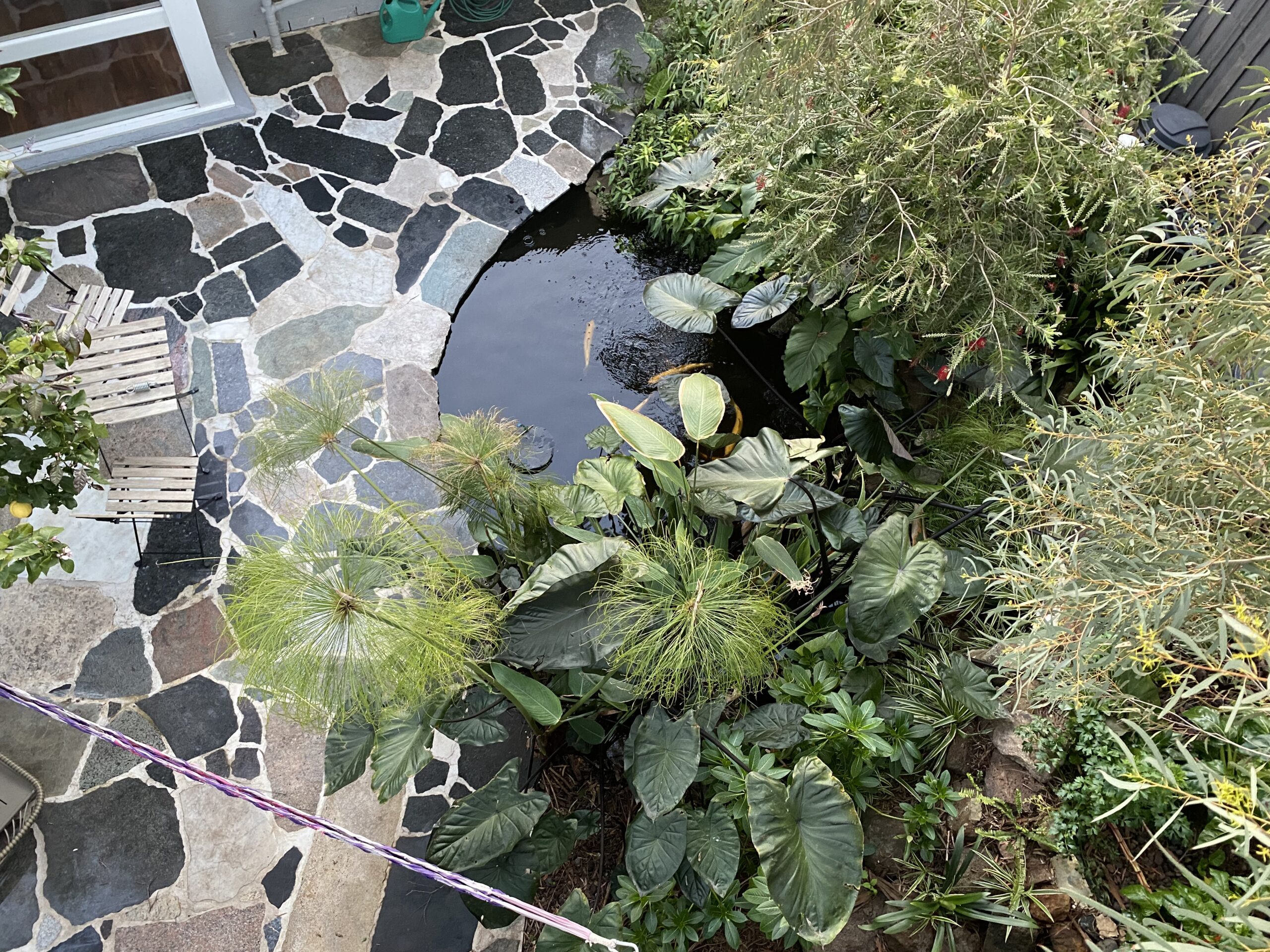
A Different Way to Design Aquaponics
Where the science of aquaculture meets the art of landscape design.
Most aquaponics is engineered for yield alone. Plastic tanks, exposed plumbing, the working parts left out where you see them. The fish stay alive, the plants grow — but the system stays separate from the life you actually live at home.
There is another way to do it.
My background sits at the crossroads of two fields that rarely meet. I hold degrees in aquaculture and landscape design, plus a master’s in food science specialized in aquaculture. I have been raising fish since 2005, and practicing aquaponics since 2010. Everything I teach comes from that intersection — the biology of a thriving aquatic ecosystem, and the craft of designing something that belongs in a garden.
When you combine the two, the system stops looking like a piece of equipment and starts looking like a feature of your home. A pond with fish you can watch in the morning. Grow beds that read as part of the landscape, not an afterthought bolted on. Water so clear you can see the fish. A closed loop where nature does most of the work and you get fresh food every week.
That is what Aquaponics Revolution is about.
The principles behind every system I teach
Four ideas run through everything I do.
Natural, not industrial
A well-designed aquaponics system should feel like it belongs in a garden — not a warehouse. Stone, wood, gentle water movement, plants and fish visible together.
Passive and low-energy
The best systems work with biology, not against it. Quiet air pumps, no harsh aeration, no constant babysitting. Calm, efficient, and eco-friendly by design.
Productive without compromise
Beauty does not mean sacrificing yield. A holistic system can produce the same amount of fish and vegetables as a utilitarian one — often more, because a balanced ecosystem is a healthier ecosystem.
Integrated with the garden
Aquaponics should not live in its own corner. It should connect to the rest of your property — paths, seating, views, biodiversity — so it becomes a place you want to spend time in.
Where to go next
This is the approach behind every course I teach. There are two gentle ways to start.
New to aquaponics? Start with the free Design Guide. It walks you through the six essential steps to launch your first system the right way.
Ready to build something integrated, beautiful, and deeply enjoyable to live with? Holistic Aquaponics is the complete training — from system design to landscape integration to long-term management.