
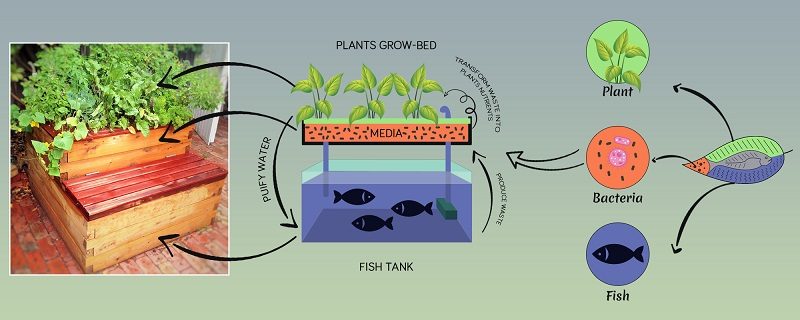
Large-scale aquaponics unlocks serious food production, income potential, and economies of scale — but it also demands careful planning, significant upfront investment, and a solid understanding of system design before you build.
Moving beyond the backyard hobby system into large-scale aquaponics (500 litres and above) is a different undertaking entirely. The biological principles are the same, but the margin for error is lower, the capital costs are real, and the opportunity for genuine commercial or community food production is significant. Here’s how to plan and design a large-scale system that works.
Defining Large-Scale Aquaponics
System scale categories help set realistic expectations:
- Small home system (100–500 L): Hobby production; supplemental household food supply; 1–3 hours per week management
- Medium home system (500–2,000 L): Serious hobby; feeds a small family significantly; potential for selling surplus; 3–8 hours per week
- Large home or small commercial (2,000–10,000 L): Small business potential; farmers’ market or restaurant supply; 10–20 hours per week management
- Commercial scale (10,000 L+): Full-time operation; wholesale food supply; specialist knowledge and full-time staffing required
This guide focuses on the medium-to-large range (500–10,000 L) — where most serious home and small commercial growers operate.
What Are the Key System Design Principles for Large-Scale Aquaponics?
1. Size the System for Your Goals
Work backwards from your production goals:
- 1 kg of leafy greens per week requires roughly 300–500 L of grow bed volume
- 10 kg of fish per year requires roughly 500 L of fish tank water
- A family of four eating aquaponics produce 3–4 times per week needs approximately 1,000–2,000 L total system volume
2. Choose Your System Type Strategically
For larger systems, the choice of system type significantly affects cost, management, and crop options:
- Media bed (flood and drain): Most versatile — grows the widest range of crops including fruiting vegetables. Best management simplicity. Higher media cost at scale.
- Deep water culture (DWC/raft): Highest production volume for leafy greens. Lower media cost. Less suitable for fruiting crops without supplementation. Best for market gardens focused on lettuce and herbs.
- Hybrid (media bed + DWC): The preferred choice for most serious growers — media beds for fruiting crops, DWC raft channels for leafy greens. Maximises system productivity.
3. Design for Water Flow and Redundancy
At large scale, pump failure means fish can die within hours. Design for redundancy:
- Install a backup pump or a gravity-fed emergency overflow system
- Use a timer or float valve to maintain minimum water levels during pump failure
- Install a battery backup for your air pump — fish survive pump failure much longer with aeration maintained
- Consider an automated alarm system for pH and ammonia — commercial systems use sensor-based alerts via mobile phone
4. Plan Your Fish Species and Stocking Schedule
At scale, staggered stocking (adding new fish cohorts every 3–4 months) levels out biomass, ensures continuous harvests, and prevents feast-famine nutrient cycles. Plan for:
- 3–4 cohorts of fish at different growth stages simultaneously
- A separate nursery tank for fingerlings (protects small fish, allows better management)
- A harvest schedule tied to fish growth rate and market demand
Large-Scale Aquaponics Cost Analysis
Construction Costs
- Fish tanks (IBC totes, fibreglass, or concrete): $500–$5,000 per unit depending on material and size
- Grow beds or DWC channels: $200–$2,000 per unit (DIY timber/liner significantly cheaper than commercial)
- Grow media (river gravel, clay pebbles): $100–$500 per m³
- Plumbing and pumps: $500–$3,000 depending on complexity and redundancy
- Greenhouse or shade structure: $1,000–$20,000+ (critical for year-round production in most climates)
- Total for a serious 2,000–5,000 L system: $5,000–$25,000 depending on approach and finish
Operating Costs
- Fish feed: $50–$200 per month for a 2,000–5,000 L system
- Electricity (pump + aeration + lighting): $30–$100 per month
- Fingerlings: $50–$200 per stocking event every 3–4 months
- Supplements (iron, potassium): $20–$50 per month
Revenue Potential (Small Commercial)
- Leafy greens at farmers’ markets: $8–$15 per kg; a 5,000 L system can produce 20–50 kg per week = $160–$750 per week revenue
- Live fish sales: $20–$40 per kg for silver perch or barramundi
- Herbs (basil, mixed): $30–$60 per kg — highest value-per-area crop in aquaponics
Large-Scale Management Requirements
- Water testing: Daily pH, ammonia, and nitrite checks; weekly full panel
- Feeding: Minimum twice daily; timed automatic feeders for consistency at scale
- Harvest and replanting: Weekly succession planting and harvest schedule to maintain continuous production
- Fish health monitoring: Daily visual inspection; weekly weighing of sample fish to track biomass
- Record keeping: Production logs, water quality records, and financial tracking are essential at commercial scale
Frequently Asked Questions
Can I make a living from aquaponics?
Yes, but it requires scale, excellent production management, and reliable markets. Most profitable small commercial operations focus on high-value crops (basil, specialty greens, edible flowers) and direct markets (farmers’ markets, restaurants, box schemes). A 5,000–10,000 L system can generate $50,000–$120,000 in annual revenue with excellent management.
Do I need council permits for large-scale aquaponics?
In Australia, requirements vary by state and council. Commercial aquaculture typically requires a licence. Large greenhouse structures may need development approval. Check with your local council and state Department of Primary Industries before building at commercial scale.
What is the most important thing to get right in large-scale aquaponics?
Water quality management. At scale, a water quality failure affects a large fish population and a large plant crop simultaneously. Invest in quality testing equipment, redundant aeration, and automated monitoring before worrying about production optimisation.
How long until a large aquaponics system is profitable?
Most small commercial operations reach profitability in 18–36 months, after the system is fully established, markets are developed, and management is optimised. Year one is typically learning and system stabilisation; years two and three see production and revenue growth.
Ready to design and build your large-scale aquaponics system the right way? Our complete aquaponics training covers system design, scaling, management, and commercial considerations — start building today.