
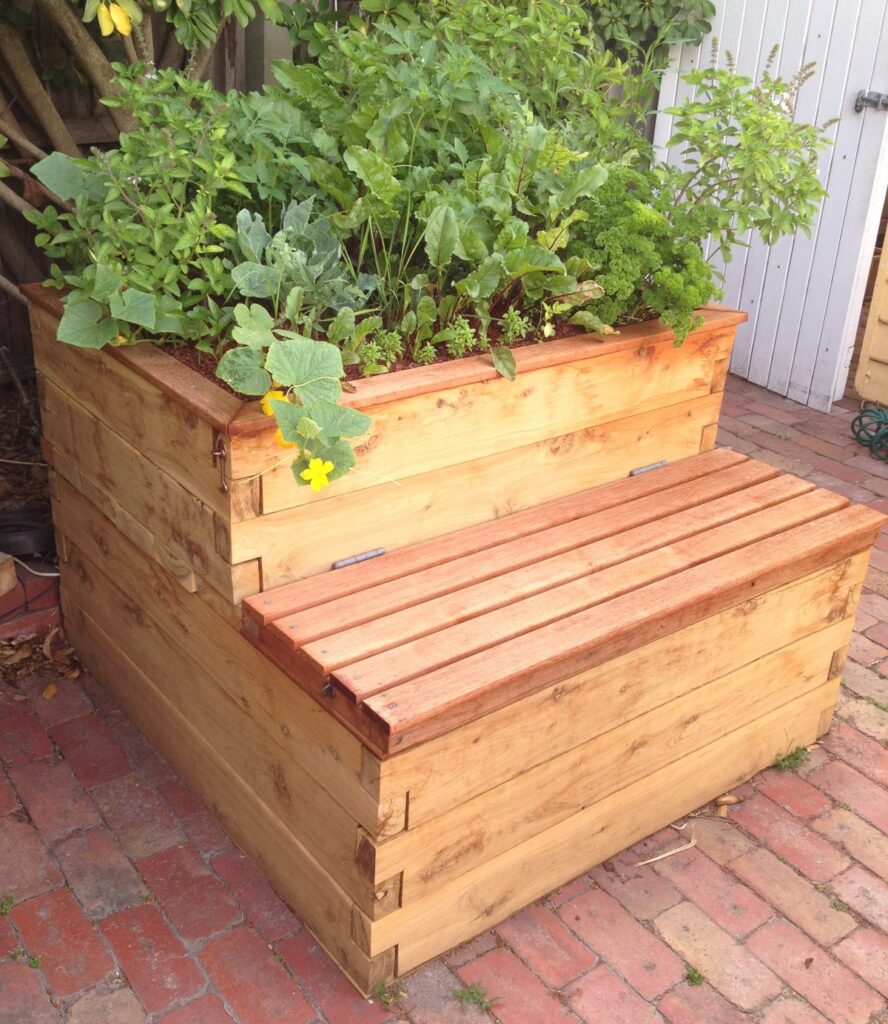
Every aquaponics system produces something most people see as a problem: the brown sludge that collects in your filter. A lot of people throw it away. I don’t. I put it on my garden, and the results speak for themselves.
But there is a question I wanted to answer properly: how do you unlock what is inside that sludge? Because a big share of what your fish eat ends up right there.
In this second episode of Study of the Week, I looked at a 2017 experiment from the Leibniz Institute of Freshwater Ecology and Inland Fisheries in Berlin. The researchers took the same fish sludge and treated it for two weeks, with air and without air. The difference was huge, and once again it comes down to pH.
Where the nutrients in fish feed go
When you feed your fish, the food does not just disappear. Part of it becomes fish growth. Part of it dissolves in the water as ammonia, which your bacteria turn into nitrate. That dissolved part is what most aquaponics systems use.
But a big share of the nutrients ends up in the solids: the fish waste and uneaten food that settle in your filter. Phosphorus, potassium, calcium, iron, magnesium, a whole range of elements.
Here is the catch. In that sludge, most of those nutrients are locked up, bound in organic matter and in minerals that plants cannot absorb directly. That is why so many aquaponics systems end up short on phosphorus, potassium and iron, while the very nutrients they need are sitting in the filter.
The 2017 study: same sludge, with and without air
The study is Monsees, Keitel, Paul, Kloas and Wuertz (2017), published in Aquaculture Environment Interactions. The team worked with a real aquaponics research system raising tilapia, with a settling tank collecting the solids.
Once a week, they collected the water and sludge from that settling tank, mixed it well, and split it into six identical 30-litre tanks.
- Three tanks got an airstone, bubbling air the whole time. That is the aerobic treatment, with oxygen.
- Three tanks got nothing but a tight lid. The bacteria inside used up the oxygen very fast: in a separate test, the oxygen in the sludge went from over 5 mg/L to zero in about 45 minutes. That is the anaerobic treatment, without oxygen.
All six tanks were closed, kept warm at 26 °C, covered to keep algae out, and left for two weeks. The whole experiment was repeated three times. Then the researchers measured what had come out into the water.
The results
With air
Dissolved phosphate, the form plants can absorb, went from about 9.4 to 29.7 mg/L. More than three times as much. Potassium went up by about 30%. And nitrate, the main source of nitrogen for your plants, only dropped by about 16%.
Without air
The story was completely different. Phosphate did not move at all. Nitrate collapsed: it dropped by 86% in two weeks, and in an earlier small test without oxygen, 97% of the nitrate was gone in just four days.
Why? Without oxygen, some bacteria start breathing nitrate instead. They turn it into nitrogen gas, and it simply escapes into the air. At the same time, ammonia rose from about 1 to almost 8 mg/L.
So the tank without air did not just fail to release the phosphorus. It threw away the nitrogen your plants need, and it produced ammonia, which is the last thing you want near your fish. Same sludge, same water. Just adding oxygen made the difference.
Why it works: pH again
If you read my post on the pH 7 myth, you will recognise this part.
In the aerated tanks, the pH went down from about 6.2 to 5.3. When bacteria break down sludge with oxygen, they breathe out CO2, and nitrification adds acidity too. The water turns acidic. In the tanks without air, the pH went the other way, up to around 7, because the bacteria that remove nitrate actually consume acidity.
And acidity is the key. The researchers looked at how the phosphorus is held inside the sludge. About half of it was bound to calcium. At a neutral pH that phosphorus stays locked; when the water turns acidic, it dissolves. Another quarter was only loosely bound and easy to release, and just a few percent was tied up in organic matter. By their estimate, two weeks of aeration released roughly half of the phosphorus in a weekly sludge harvest.
So pH is not just about your fish, your bacteria and your plants. It is also what unlocks your sludge. And oxygen is what turns the key.
What this means for your own system
1. Stop seeing sludge as waste
It is one of the richest parts of your system. This is also why I would rather see a few solids in a system than over-filter everything out and send it down the drain.
2. You have two ways to use it
You can take it out and put it straight into the garden, like I do. That is simple, it costs no energy, and the soil life does the work. Or you can treat it in water and bring the nutrients back into your aquaponics system.
3. If you treat it in water, give it air
Keep it simple: a separate tank, an airstone, a lid, and time. That is essentially what the researchers did for two weeks. And never leave sludge sitting without oxygen if you want to use it for your plants. That is how you lose your nitrogen.
The researchers also suggest that a longer treatment, or regularly adding more concentrated sludge, would make the water acidic faster and release even more.
4. Think about energy
Aeration has a cost. In a system designed to be as natural and passive as possible, the garden route may be the better choice, or a small aerated tank that runs only when you need it.
The honest limits of the study
- This was a research system with tilapia on a commercial diet, in tanks kept at 26 °C. Their sludge was quite diluted, and they used lime to keep the system pH up, which adds calcium. Your sludge may behave differently.
- Even after aeration, the phosphate level was still far below what commercial tomato growers usually feed their plants. It is a real boost, not a complete fertiliser.
- The researchers measured nutrients in the water. They did not grow plants with it in this study, and they say themselves that cost and biological safety still need to be proven.
- The treated water is acidic, around pH 5.3. If you bring it back into your system, do it gradually and keep an eye on your pH.
So take this as a direction, not a recipe.
Nothing needs to be thrown away
What I love about this study is that it confirms something every gardener knows: the richest things in nature often look like waste. In an aquaponics system, nothing really needs to be thrown away. The fish feed the plants through the water, and they feed the garden through the sludge.
Watch the video
I go through the experiment, the results and the takeaways in episode 2 of Study of the Week:
How it all fits together
Sludge, pH, bacteria and plants are all part of the same cycle. If you want to understand how it fits together, the nitrogen cycle and the balance between fish, plants and bacteria, that is what I teach in Easy Aquaponics.
Talk soon,
Jonathan
Source
- Monsees, H., Keitel, J., Paul, M., Kloas, W., & Wuertz, S. (2017). Potential of aquacultural sludge treatment for aquaponics: evaluation of nutrient mobilization under aerobic and anaerobic conditions. Aquaculture Environment Interactions, 9, 9-18. https://doi.org/10.3354/aei00205 (open access)