
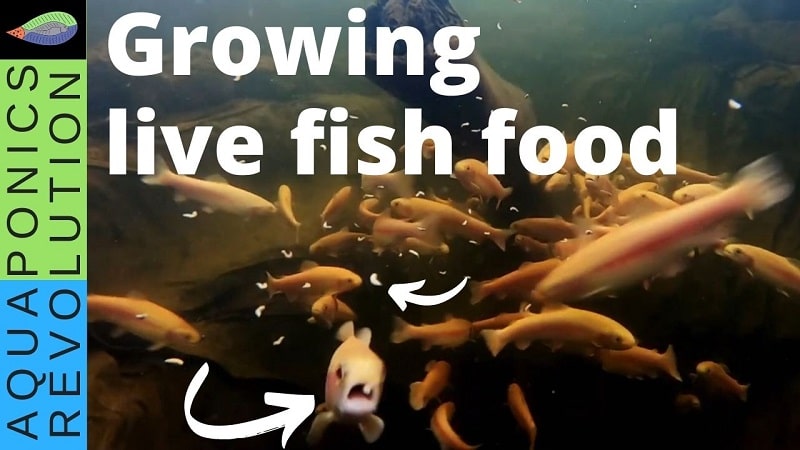
Making your own fish food turns aquaponics into a genuinely closed-loop system — reducing costs, cutting reliance on industrial feed, and improving the health of both your fish and your plants.
Commercial fish pellets work, but they come with hidden costs: wild-caught fish meal, global shipping, and preservatives. For aquaponics growers who want true sustainability — or simply want to reduce their ongoing expenses — growing live feed at home is both practical and rewarding. Here’s how to do it.
Why Make Your Own Fish Food for Aquaponics?
Problems with Commercial Fish Pellets
- Environmental cost: Carnivorous fish pellets require 3–4 kg of wild-caught fish for every 1 kg of feed produced — depleting ocean ecosystems.
- Ongoing expense: Feed is one of the largest recurring costs in aquaponics, particularly for faster-growing species.
- Supply vulnerability: Commercial feed prices fluctuate and supply can be disrupted.
- Unknown ingredients: Many commercial feeds contain fillers, colourants, and antibiotics that reduce the natural-food quality of your harvest.
Benefits of Homemade Fish Feed
- Lower cost: Live feed like duckweed and black soldier fly larvae can be produced virtually free using kitchen scraps and sunlight.
- Higher nutrition: Fresh live feed is nutritionally superior to dried pellets — more bioavailable protein, omega-3 fatty acids, and natural enzymes.
- Closed-loop integration: Organic waste from your kitchen or garden feeds your live feed cultures, which feed your fish, whose waste feeds your plants.
- Species suitability: You can tailor feed composition to the specific nutritional needs of your chosen fish species.
What Are the Best Homemade Fish Foods for Aquaponics?
1. Duckweed (Lemna minor)
Duckweed is arguably the most valuable homemade fish food for aquaponics. This tiny floating aquatic plant is 35–45% protein by dry weight — comparable to soybean meal — and can be grown in a separate pond or container using fish tank overflow water.
- How to grow it: Add duckweed to a shallow container (20–30 cm deep), fill with slightly nutrient-rich water (your aquaponics overflow works perfectly), and place in full sun. Duckweed doubles its mass every 2–3 days in warm weather.
- How to feed it: Skim handfuls off the surface daily. Feed directly to fish — most herbivorous and omnivorous species consume it enthusiastically.
- Best for: Tilapia, silver perch, goldfish, koi, carp, barramundi (supplemental).
- Not ideal for: Carnivorous fish like trout, which need high animal protein.
2. Black Soldier Fly Larvae (BSFL)
Black soldier fly larvae (Hermetia illucens) are a powerhouse fish food: 40–45% protein, 25–30% fat, and rich in calcium and amino acids. They self-harvest, require almost no management, and consume virtually any organic waste.
- How to farm them: Build or buy a BSFL composting bin. Add kitchen scraps, fruit waste, vegetable trimmings, or manure. Adult flies lay eggs naturally in the bin. Larvae hatch, feed on organic matter, and climb a ramp when mature — collecting themselves in a bucket at the bottom.
- How to feed them: Harvest mature larvae from the collection bucket and feed directly to fish. Surplus can be frozen for later use.
- Best for: Almost all species — tilapia, silver perch, barramundi, catfish, trout (partial replacement for commercial feed).
- Setup cost: $50–$200 for a commercial BSFL bin, or build one from timber and mesh for around $30.
3. Earthworms
Earthworms are a natural, high-protein food source (60–70% protein by dry weight) that can be farmed in a worm composting bin (vermicompost) alongside your aquaponics system.
- How to farm them: Set up a worm farm with kitchen vegetable scraps, cardboard, and aged compost. Keep moist and out of direct sun. Harvest worms weekly by luring them to a fresh food source on the surface.
- How to feed them: Chop larger worms for small fish; feed whole to larger species.
- Best for: Trout, silver perch, barramundi, perch — any predatory or semi-predatory species.
- Bonus: Worm castings from your farm are an excellent organic fertiliser supplement for aquaponics plants.
4. Azolla (Water Fern)
Azolla is a floating fern with a unique advantage: it fixes atmospheric nitrogen through a symbiotic relationship with cyanobacteria, meaning it needs no nitrogen fertiliser to grow. Protein content is 25–30% dry weight.
- How to grow it: Azolla grows freely in a shallow container of still or slow-moving water. It prefers temperatures of 18–28°C and partial shade.
- How to feed it: Harvest by hand and feed fresh to fish, or dry and crumble over the water as a supplement.
- Best for: Tilapia, silver perch, koi, goldfish.
5. DIY Pellets from Mixed Ingredients
For a more complete balanced diet, particularly for carnivorous species, you can blend and dry your own pellet mix:
- Ingredients: BSFL or worm meal (protein), spirulina powder (vitamins, pigmentation), duckweed powder (fibre, protein), wheat flour (binder), fish or vegetable oil (energy).
- Process: Blend dry ingredients, add water and oil to form a stiff dough, push through a pasta maker or hand extruder to form pellets, and dry in the sun or a dehydrator at 60–70°C.
- Storage: Keep dried pellets in an airtight container in a cool, dry place. Use within 4–6 weeks for best nutrition.
How Much Live Feed Do You Need to Supplement Commercial Pellets?
Most growers don’t replace 100% of commercial feed immediately — they gradually increase the proportion of live feed as production scales up. A practical starting approach:
- Phase 1: 20–30% live feed (duckweed or BSFL), 70–80% commercial pellets
- Phase 2: 50% live feed, 50% pellets (requires a mature BSFL colony and duckweed pond)
- Phase 3: 80–100% live feed (requires a well-integrated, productive live feed farm)
Monitor fish growth rates and body condition carefully as you transition. Reduce live feed proportion temporarily if fish appear thin or growth slows.
Frequently Asked Questions
Is it safe to feed fish kitchen scraps directly?
Not directly — cooked food, salt, oil, and processed foods can harm fish and disrupt your nitrogen cycle. Instead, use kitchen scraps to feed your BSFL or worm farm, then feed the larvae/worms to fish. This conversion step ensures safety and maximises nutrition.
Can duckweed replace all commercial fish food?
For herbivorous fish like tilapia, duckweed can form the majority of the diet (60–80%) when combined with other plant-based feeds. For carnivorous species like trout, duckweed should be supplemental only — these fish need high animal protein.
How long does it take to set up a BSFL farm?
From setup to first larva harvest is typically 4–8 weeks, depending on local fly populations and temperature. BSFL farms are most productive in warm weather (20–35°C). In cooler climates, starting a colony in late spring gives the best results.
Do homemade fish foods affect water quality?
Live feeds like duckweed and fresh BSFL are highly digestible, meaning fish absorb more nutrients and produce less waste than with lower-quality commercial pellets. This can actually improve water quality. Always remove uneaten live feed within 30 minutes to prevent decomposition.
What fish species are easiest to feed with homemade food?
Tilapia, silver perch, goldfish, and koi are the easiest — they readily accept duckweed, azolla, and BSFL. Trout are more demanding and require high-protein diets; BSFL and earthworms are better choices than plant-based feeds for this species.
Want to build a fully sustainable aquaponics system — from fish feeding to plant harvest? Our complete aquaponics training includes everything you need to design, stock, and run a productive system from day one.
Hi Jonathan,
I would like to thank you for the great article and videos.
It is an interesting thing I would like to try it for my Carp / Gold fish too.
Thanks Bledi, Yes try it and let us know how you go. You should have great results 🙂
Let me know if you find ways to improve the system.
Cheers