
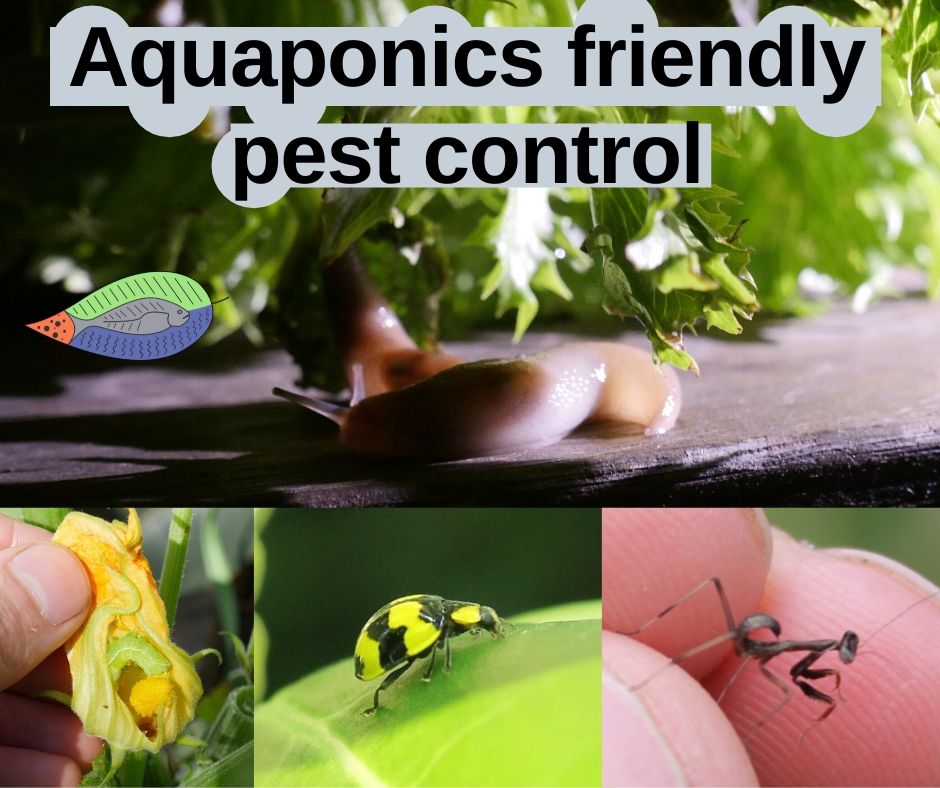
Pest management in aquaponics is completely different from conventional gardening — you can’t spray chemicals, which means you need to be smarter, faster, and more strategic about how you protect your plants.
The no-chemical rule in aquaponics is absolute: even “organic” pesticide sprays can harm fish and devastate your beneficial bacteria colony. But this constraint is also an opportunity — properly designed aquaponics systems have natural defences that make them more pest-resistant than most soil gardens. Here’s how to prevent, identify, and control pests without harming your ecosystem.
Why Can’t You Use Pesticides in Aquaponics?
Most pesticides — including many certified organic options — are highly toxic to fish and aquatic life at very low concentrations. Neem oil, pyrethrin, copper-based fungicides, and even insecticidal soap can kill fish if they reach your water. Because your plants sit directly above or in the water, any spray has a direct pathway to your fish tank. The only safe approach is prevention-first, followed by physical and biological controls.
The First Line of Defence: Prevention
Physical Barriers
Preventing pest access is always more effective than dealing with an infestation:
- Insect netting (40–50 mesh): The most reliable protection against aphids, whitefly, thrips, and caterpillar moths. Frame over grow beds with PVC conduit or timber hoops.
- Row covers: Lightweight spunbond fabric lets light and water through while blocking flying insects.
- Copper tape: Around bed edges creates a mild electrical deterrent for slugs and snails.
- Yellow sticky traps: Hang above grow beds to catch and monitor flying pest populations. Not a cure but an early warning system.
Companion Planting
Interplanting pest-repellent species among your crops reduces pest attraction and disrupts pest search patterns:
- Basil: Repels aphids, whitefly, and spider mites. Plant between tomatoes and capsicum.
- Marigolds (Tagetes): Deter aphids, nematodes, and whitefly through volatile compounds.
- Nasturtiums: Act as a trap crop — aphids prefer nasturtiums over most vegetables; plant at bed edges and sacrifice them to protect main crops.
- Chives and garlic chives: Repel aphids and carrot fly. Excellent border plants.
- Dill and fennel: Attract predatory beneficial insects (lacewings, parasitic wasps).
System Design for Pest Resistance
- Avoid overcrowding — dense plantings trap humidity and create ideal fungal and pest conditions.
- Maintain good airflow around grow beds — fans or strategic open spacing reduce fungal disease pressure.
- Remove dead leaves and plant debris promptly — decaying material harbours pests and fungal spores.
- Rotate crops between beds where possible — breaking pest life cycles.
Common Aquaponics Pests and Organic Control Methods
Aphids
Identification: Tiny soft-bodied insects (green, black, or white) clustered on new growth and undersides of leaves. Sticky residue (honeydew) on leaves is a telltale sign.
Control:
- Strong water spray to dislodge colonies — do this away from the fish tank or use a cloth to prevent water runoff
- Introduce ladybirds or lacewing larvae (available from biological control suppliers)
- Diluted dish soap wiped directly on plants (not sprayed) — minimal water risk if applied carefully
- Yellow sticky traps to monitor and catch winged aphids
Whitefly
Identification: Tiny white flying insects that disperse in a cloud when plants are disturbed. Cause yellowing, sticky leaves, and sooty mould.
Control:
- Yellow sticky traps (highly effective for whitefly)
- Introduce Encarsia formosa — a parasitic wasp that specifically targets whitefly (available from biological control suppliers)
- Remove heavily infested leaves immediately and dispose of away from the system
Spider Mites
Identification: Tiny red or brown mites; fine webbing on undersides of leaves; stippled, yellowing foliage. Worst in hot, dry conditions.
Control:
- Increase humidity around affected plants — spider mites hate moisture
- Introduce predatory mites (Phytoseiulus persimilis) — extremely effective
- Remove and destroy heavily infested plants
Fungus Gnats
Identification: Small dark flies around the base of plants; larvae in moist media eat fine roots.
Control:
- Yellow sticky traps at soil/media level catch adults
- Allow media surface to dry slightly between flood cycles if possible
- Introduce Steinernema feltiae (beneficial nematodes) into media — they parasitise larvae
- Top-dress media with a dry layer of coarse sand to deter egg-laying
Caterpillars and Moths
Identification: Chewed leaves with irregular holes; green or brown caterpillars (often camouflaged) on undersides of leaves; moth eggs in clusters.
Control:
- Hand-pick caterpillars and eggs at dawn or dusk
- Use insect netting — the only reliable prevention for moth species
- Apply Bacillus thuringiensis (Bt) — a naturally occurring soil bacterium that specifically kills caterpillars when ingested, safe for fish and beneficial insects at label rates
Slugs and Snails
Identification: Slime trails, irregular holes in leaves, often worse after rain or irrigation.
Control:
- Copper tape around bed edges
- Remove hiding spots (debris, dark moist areas) near beds
- Beer traps — containers sunk to rim level, filled with beer, lure and trap slugs overnight
- Iron phosphate-based slug bait (Ecoguard, Multiguard) — safe for fish and wildlife, unlike metaldehyde baits
Biological Control: Your Most Powerful Tool
Biological control — introducing natural predators — is the most sustainable and effective long-term pest management strategy in aquaponics. Key beneficial organisms available in Australia:
- Ladybirds and their larvae: Consume up to 200 aphids per day
- Lacewing larvae: Voracious predators of aphids, thrips, and small caterpillars
- Parasitic wasps (Encarsia, Aphidius): Species-specific control of whitefly and aphids
- Predatory mites (Phytoseiulus, Amblyseius): Control spider mites and thrips
- Beneficial nematodes (Steinernema): Soil-level control of fungus gnat larvae, thrips pupae
Australian suppliers including Bugs for Bugs and Biological Services supply all of these commercially.
Frequently Asked Questions
Can I use neem oil in aquaponics?
Neem oil is toxic to fish and aquatic invertebrates and should never be sprayed directly in or near your system. If used at all, apply carefully to isolated plants far from the water with no runoff risk — but the safest approach is to avoid it entirely and use biological controls instead.
What organic pesticides are safe for aquaponics?
Very few spray-on pesticides are truly safe for aquaponics water. Bacillus thuringiensis (Bt) applied to plant foliage is the safest option for caterpillar control. Iron phosphate slug bait is safe around water. For everything else, physical barriers and biological controls are preferred over sprays.
Why are my aquaponics plants getting more pests than my soil garden?
Dense plantings, high humidity around beds, and the absence of natural soil predators (ground beetles, centipedes) can make aquaponics grow beds initially more pest-prone than established soil gardens. The solution is to introduce biological controls and add physical barriers — over time, a balanced beneficial insect population stabilises pest pressure.
Can fish eat the pests from my aquaponics plants?
Indirectly — if you knock pests like aphids or caterpillars directly into the fish tank, many species will eat them enthusiastically. Some growers deliberately position grow beds to allow pest insects to fall or be knocked into the tank. This is a practical minor supplementary feed source.
Want to build a pest-resilient aquaponics system from the ground up? Our complete aquaponics training includes system design, plant selection, and integrated pest management — build yours today.
A passive, balanced system has fewer pest problems by design. That principle — and three more — live on the Our Approach page.
Thank You, This was very insightfull.
Thanks Frans, Great to read.
Very nice article with some good suggestions. I like your suggestion of a light above the fish tank. Good idea!
Thanks Moray 🙂